

Sulphur dust collection that always works.
A continuously wetted exhaust system for sulphur handling: dust is captured with water at every pickup point, so ducts stay clean, fire risk is designed out, and the collected sulphur is recovered.
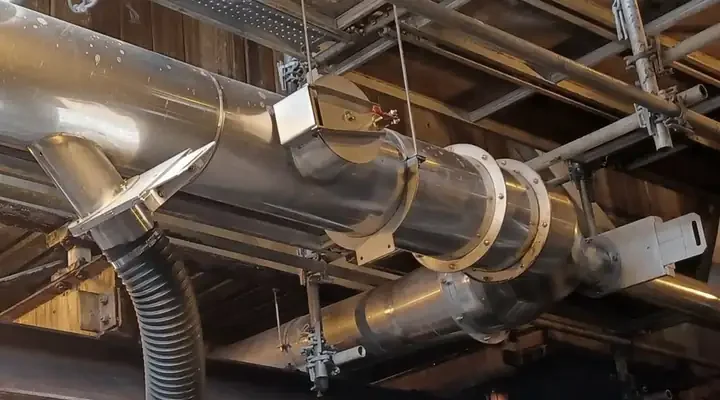
Dry dust ducts plug. Wet ones don’t.
At sulphur transfer points, water-based dust suppressants meet granules that can still be hot. The air drawn off is humid and loaded with fine sulphur dust.
In a conventional dry exhaust system that moisture condenses on the duct walls, dust cakes onto it and the ducts foul, plug and become a fire risk. Maintenance never stops, and collection fails when it is needed most.
Our wet exhaust system turns the problem around: scrubbing water is added at every inlet, so the whole duct network runs wet, flushed continuously, with nothing left to build up or burn.
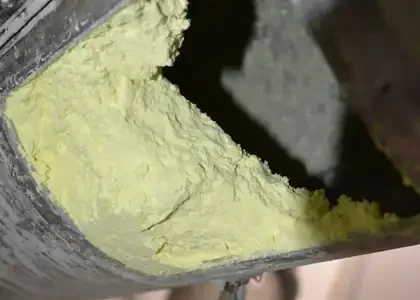
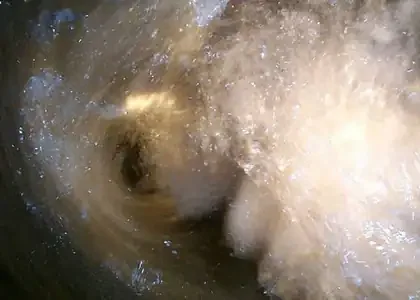
Four stages, one closed water loop
Every system is sized to the site’s transfer points, airflows and dust data. Typical arrangement shown.
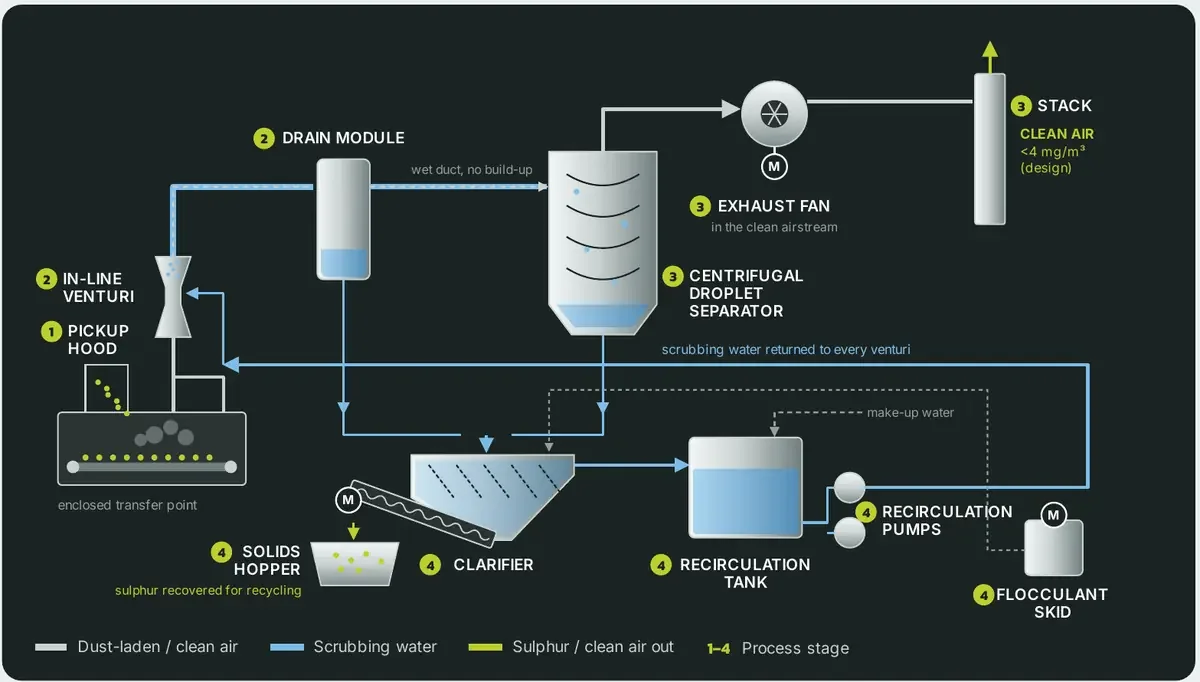
Capture
Enclosed transfer points are held under slight negative pressure. Dust-laden air is drawn off both sides of each loading zone.
Scrub
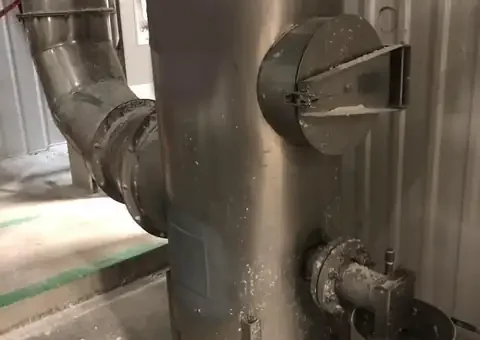
In-line venturis inject recirculated water at every pickup and encapsulate the dust. Drain modules take out most of the water at low points.
Separate
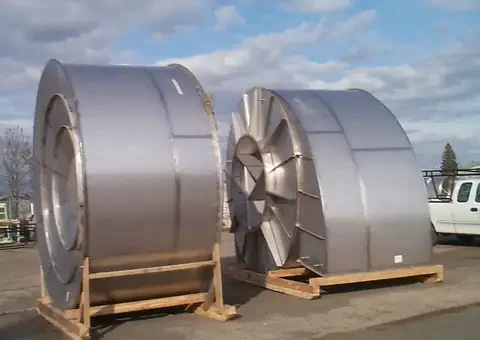
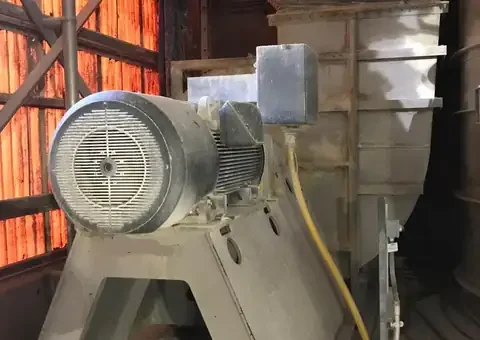
A centrifugal droplet separator spins out the remaining water. The fan sits in the clean airstream and discharges to stack.
Recover
An inclined-plate clarifier settles out the sulphur solids for recycling. Clarified water is recirculated to the venturis.
Engineered around the dust, not just a catalogue.
Sulphur dust is fine, sticky when wet, and corrosive. Every Safe Sulphur dust collection system is custom-designed from the site’s transfer-point layout, airflows and particle size data, and sized to meet the required stack emission with margin.
Ducts that never plug
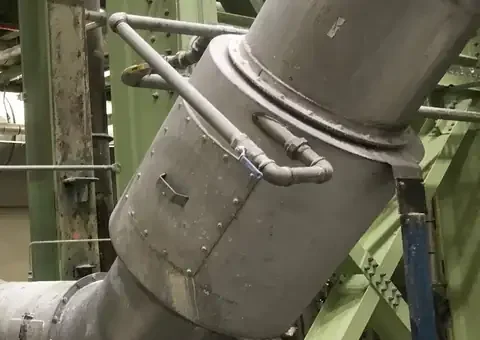
A continuous high flow of scrubbing water flushes the entire duct network, and open-pipe venturi nozzles are designed not to block.
Fire risk designed out
Dust is wetted at the pickup, so no dry, combustible sulphur dust accumulates inside the ductwork.
High scrubbing efficiency
Venturi head-loss and liquid-to-gas ratio are selected to the dust size distribution: >98% and <4 mg/m³ at the stack on a recent design.
Closed water loop
Scrubbing water is clarified and recirculated, with pH and flocculant control. Make-up is only a small fraction of the recirculation flow.
Stainless and Ex-rated
316L ducts and vessels, duplex fan wheel, ATEX Zone 21/22 motors and Ex tb instruments for sulphur dust areas.
Sulphur recovered
Settled solids are collected in self-dumping hoppers and can be recycled, for example through a Safe Sulphur remelter.
From a single pickup to a multi-point system
Selectable pickups
Where conveyors run one at a time, actuated divert dampers draw air only from the active loading zone, keeping the system small.
Simultaneous pickups
Where several conveyors load together, every zone is exhausted continuously through its own venturi and drain module.
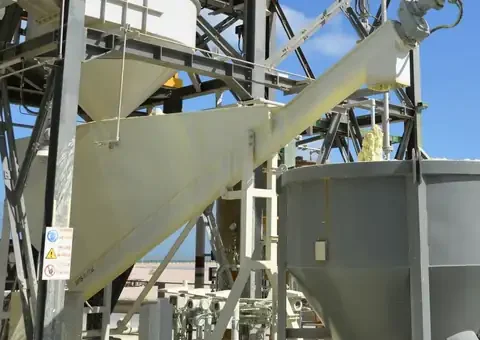
Separator skid package
Separator, fan, stack, recirculation tank, pumps, clarifier and flocculant skid on a pre-assembled structure with platforms.
Typical design basis
| Airflow | Single pickups to multi-point systems; separators to 120,000 m³/h |
| Applications | Conveyor transfer towers, railcar unloading hoppers, loading points, silos and other sulphur dust sources |
| Performance | >98% scrubbing efficiency, <4 mg/m³ at the stack (design example) |
| Scrubbing | In-line venturis, ~3.5 kPa throat loss, >1 L of water per m³ of air |
| Materials | 316L stainless ductwork and vessels, duplex 2205 fan wheel |
| Area class. | ATEX Zone 21/22 motors, Ex tb IIIB instruments |
| Controls | Local control panel, monitored and operated from the plant DCS |
| Climate | Designed for ambient temperatures to +58 °C, 30-year service life |
Every system is engineered to the site. Figures are typical and confirmed against the client’s dust data and emission limit.
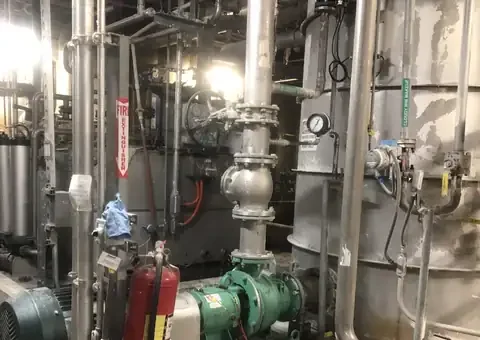
Sulphur export terminal, Gulf region
Granulated sulphur moves through six conveyor transfer towers. Water-based dust suppression on hot granules makes the loading zones humid, the conditions in which conventional dry collectors foul and plug.
Safe Sulphur engineered six wet exhaust systems, one per tower, sized from 7,000 to 38,200 m³/h. Each serves its tower’s loading zones through venturis, drain modules and a separator skid, with solids recovered for recycling through the site remelter.
One team from dust survey to clean stack
01 Assess
Site survey, dust sources and particle size data to set airflows and the emission target.
02 Engineer
Airflow and scrubbing calculations, ductwork, process, mechanical, E&I and structural design.
03 Fabricate
316L stainless ductwork and vessels from qualified shops, with proven fans and pumps.
04 Assemble & test
Skid assembly and FAT at Safe Sulphur Emdad LLC, Abu Dhabi.
05 Commission
Installation guidance, balancing, performance testing and operator training.
Dust control track record
Send us your transfer-point layout and dust data.
We’ll come back with a concept and budget price. Canadian sulphur specialists since 2003, with UAE assembly for faster delivery across the Gulf.
Safe Sulphur Systems Ltd. · Calgary, Canada
Safe Sulphur Emdad LLC · Abu Dhabi, UAE
What to send us
- Transfer-point layout and dust sources
- Which conveyors load at the same time
- Dust data, including particle size
- Required stack emission limit